

Table of Content
Dear readers, picture this. It is December 1926, and a guest at a spa hotel in Harrogate is reading the morning papers. Every front page is talking about a famous crime writer who has gone missing. The guest notices that the missing woman looks a lot like her, and she even mentions it to the other people in the hotel.
That guest was Agatha Christie herself.
At least, that is how Christie described it. You may have heard that she never spoke about her 11 missing days and took the secret to her grave. That isn’t really true. In 1928 she told a newspaper exactly what she believed had happened, and a hundred years after the Agatha Christie disappearance, hardly anyone remembers her answer.
The Worst Year of Her Life
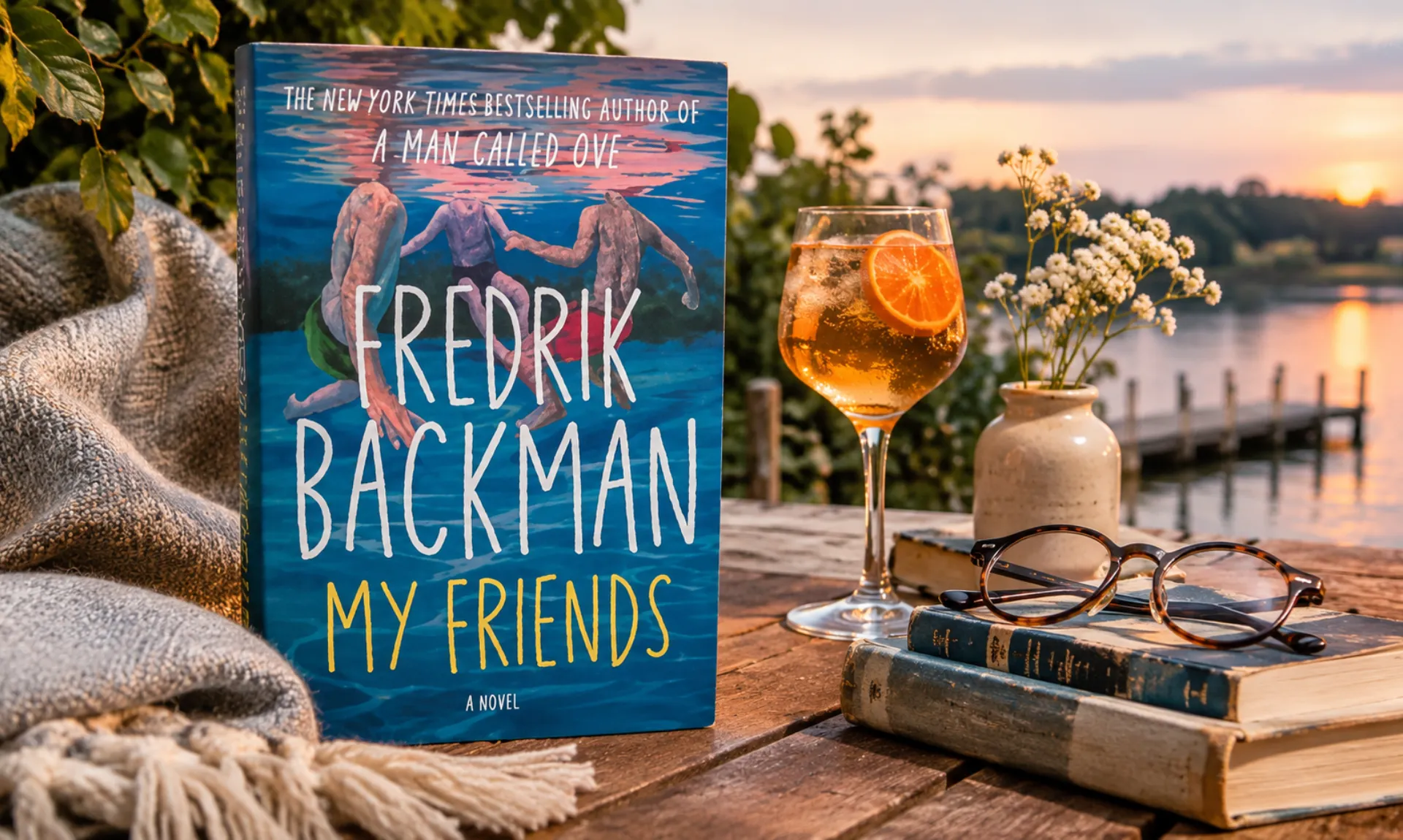
1926 should have been a wonderful year for her. In June she published The Murder of Roger Ackroyd, the novel with the twist ending that made her famous. Some of her best books were still ahead of her, like And Then There Were None, one of the four books that got me back into reading, and Hallowe’en Party, which made our Halloween list.
Her personal life, though, was falling apart. Her mother, Clara, died in April, and Christie later said that was when “the trouble really began.” She could hardly sleep, about two hours a night by her own account. Then, in August, her husband, Archie Christie, told her he had fallen in love with a younger woman, Nancy Neele, and wanted a divorce.
On Friday 3 December, the two of them argued, and Archie left for a weekend house party where Nancy was also a guest. That night, at around ten, Agatha kissed her sleeping daughter, Rosalind, and told one of her staff that she was “going for a drive.” She took a small suitcase and about £60, money she had saved for a winter trip to South Africa with Rosalind. Then she drove away from their home in Sunningdale, Berkshire, and nobody heard from her for 11 days.
Fifteen Thousand Detectives and One Glove
At around eight the next morning, a 15-year-old boy named Jack Best came across a car in the bushes at Newlands Corner, a beauty spot on the hills near Guildford, about 15 miles from her home. The bonnet was up, the lights were still on, and clothes from an open suitcase were lying across the seats. It was Agatha’s Morris Cowley, and there was no sign of her (Countryfile tells the full story of that morning).
You can probably guess what happened next. Her face was on every front page, and the police feared the worst. They dragged a nearby lake, the Silent Pool, and found nothing. At the height of the search, an estimated 15,000 volunteers joined more than 1,000 police officers, with planes flying over the hills. And once people learned where Archie had spent that weekend, he quickly became the main suspect.
Even other crime writers got involved. Dorothy L. Sayers, the creator of Lord Peter Wimsey, wrote about the case for the Daily News and listed four possible answers: loss of memory, foul play, suicide, or that Agatha had simply chosen to go away.
Did You Know?
Arthur Conan Doyle, the creator of Sherlock Holmes, joined the search in his own way. He was a firm believer in spiritualism, so he took one of Agatha’s gloves to a medium named Horace Leaf. Leaf said she was alive and that they would hear from her by the following Wednesday. She was found on the Tuesday.
Meanwhile, Mrs Neele Was Doing the Charleston
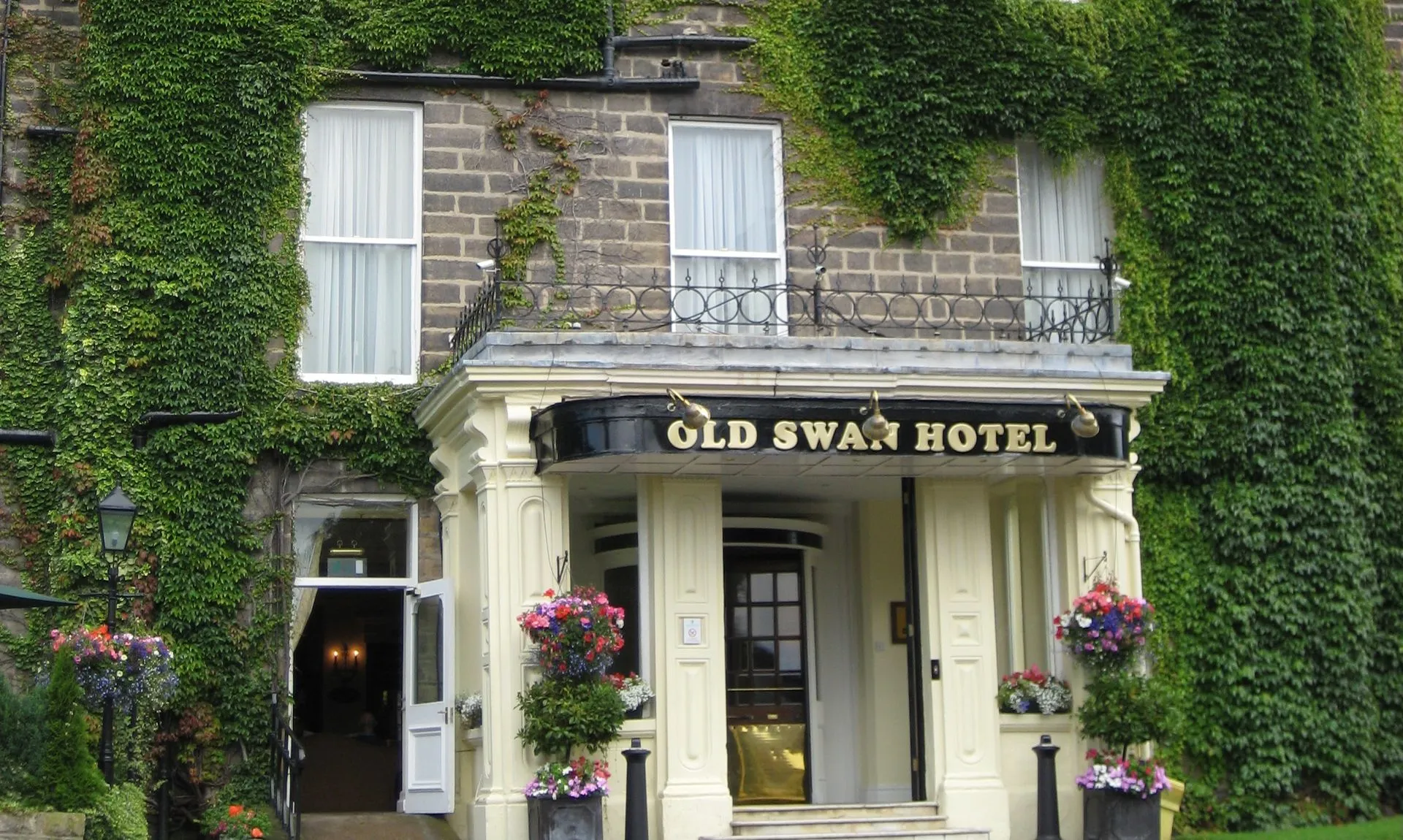
While half of England was out looking for her, a guest calling herself Mrs Neele of South Africa was staying at the Swan Hydropathic Hotel in Harrogate, about 200 miles north. Neele, the same surname as Archie’s lover. She had breakfast in her room, booked massages, borrowed books from the library and, one evening, even danced the Charleston to “Yes! We Have No Bananas.”
The hotel’s banjo player, Bob Tappin, is usually said to have recognised her, although some accounts give the credit to a head waiter. On 14 December, Archie travelled up to Harrogate and found her. He told the Daily Herald that his wife had suffered “the most complete loss of memory” and had not even known who he was, and two doctors agreed with him.
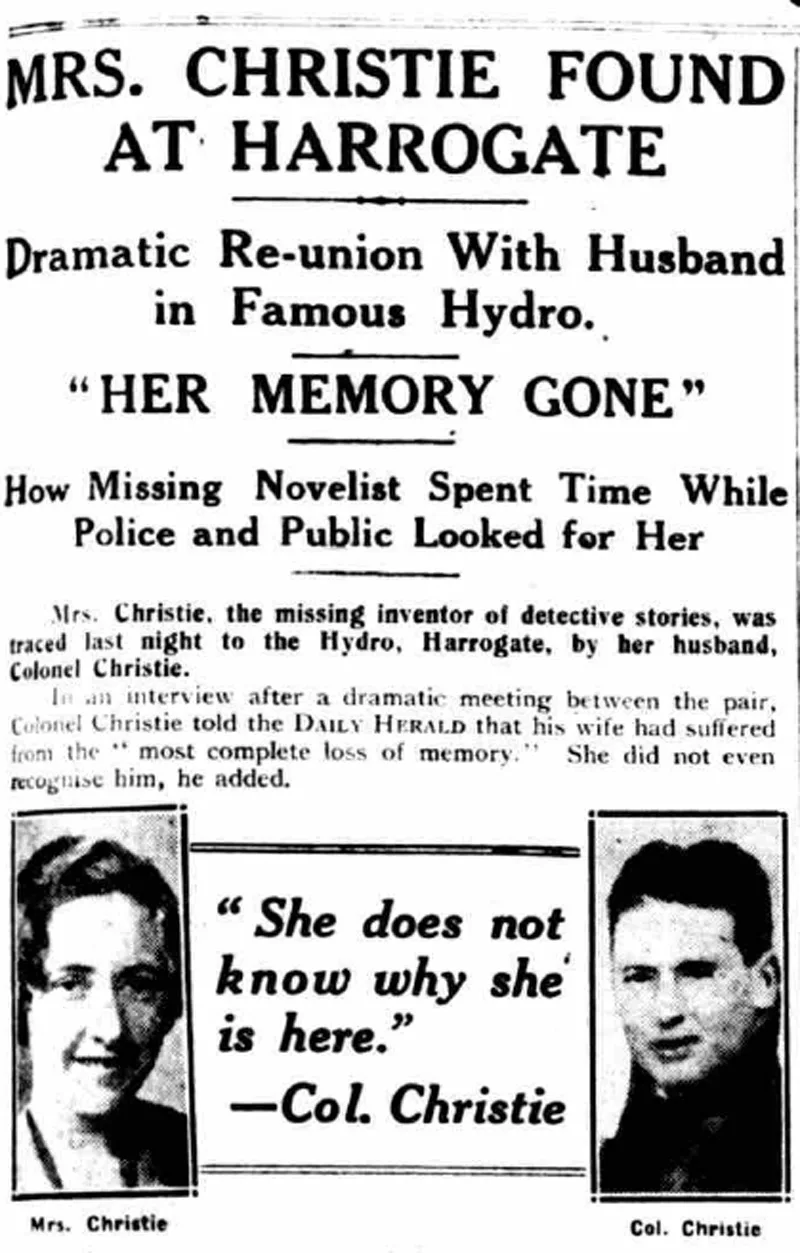
The public did not believe a word of it. In February 1927, the MP William Lunn asked in the House of Commons how much the search had cost and called the whole affair a “cruel hoax.” The Home Secretary’s answer was about £12 10s. About the thousands of volunteers, he added: “I imagine it was partly curiosity on the part of the thousands of people.” It’s hard not to smile at that one.
Why Did Agatha Christie Disappear?
People have been guessing ever since. Some thought it was a publicity stunt, since her sales went up. Others thought it was revenge: she left her car not far from where Archie was spending the weekend with Nancy, then checked into a hotel under Nancy’s surname. Jared Cade, in his book Agatha Christie and the Eleven Missing Days, argued that the whole thing was planned.
Others are much kinder to her. Historian Lucy Worsley, author of Agatha Christie: A Very Elusive Woman, believes she was in a fugue state, and so does Andrew Norman, a former doctor, in Agatha Christie: The Finished Portrait. A fugue is a rare dissociative condition, usually brought on by severe stress, in which a person loses their sense of who they are and may travel somewhere new under a different name.
Laura Thompson, who wrote Agatha Christie: A Mysterious Life, doesn’t accept the memory loss at all. “Absolutely not,” she told National Geographic. She sees it as a cover story for something much darker.
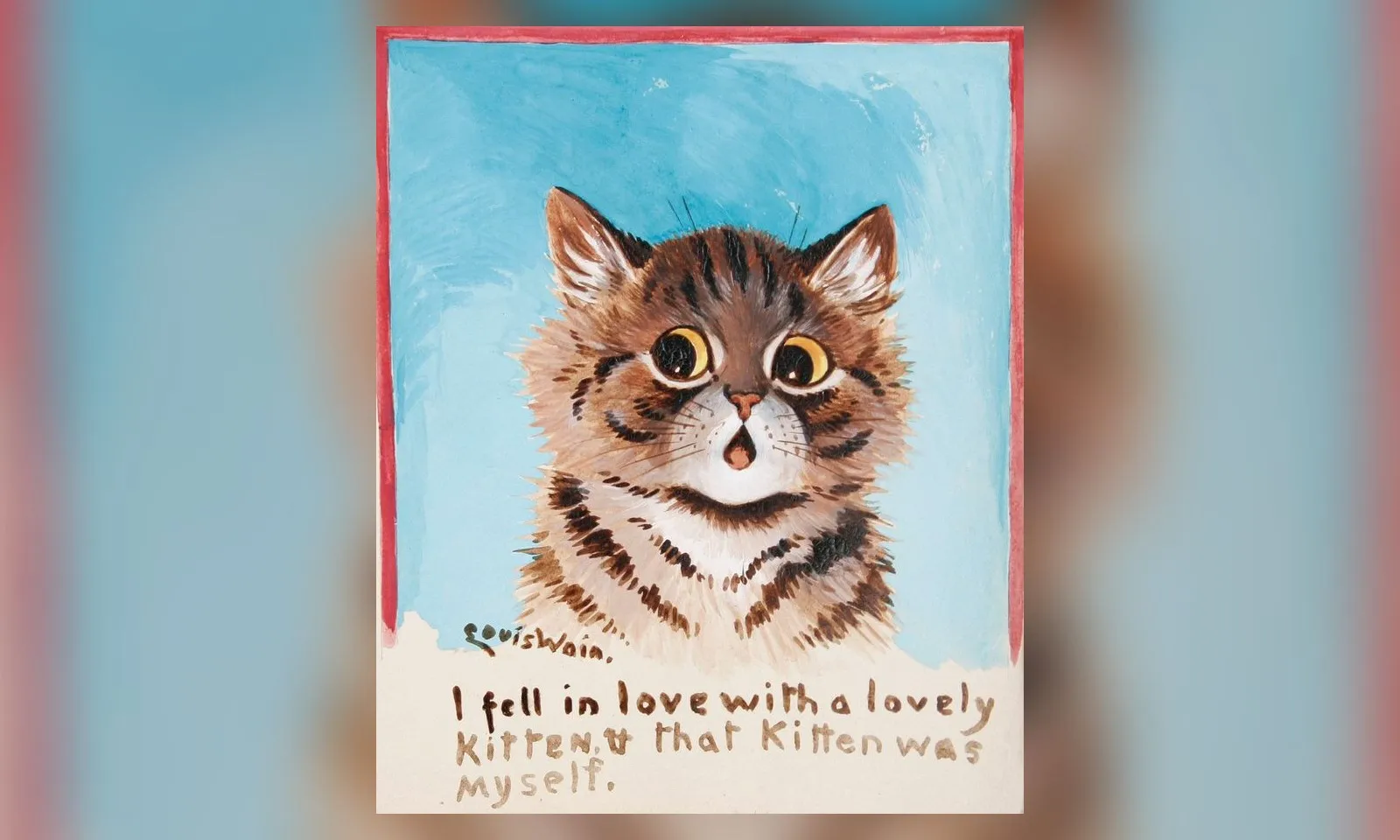
Reading all of these theories, I kept thinking of Louis Wain’s cats, another story where people wanted one neat explanation for something much messier. Now, you might be wondering: with so much guessing going on, did anyone ever just ask Agatha?
The Interview Almost Everyone Forgets
As it turns out, someone did. On 16 February 1928, while her divorce was going through, the Daily Mail printed what it called “her own full personal account” of those 11 days. A court case had pushed her into it. In a libel case, a barrister had described her as “a woman who played a foolish hoax on the police,” and her own lawyer had to answer him before the Lord Chief Justice, with a medical certificate in hand.
What she says in that interview is not easy to read. She was so low, she said, that “I just wanted my life to end,” and she left home that night “in a state of high nervous strain with the intention of doing something desperate.” After hours of driving, her car crashed near Newlands Corner and she hit her chest and head. “Up to this moment I was Mrs. Christie,” she told the paper. After the accident, her memory was gone.
And this is the part I find most fascinating. She arrived in Harrogate believing she was a widow from South Africa (remember that winter trip?). In her bag was a photo of her own daughter with the name “Teddy” on it, and she took it to be a son she had lost. The only thing that really puzzled her was her luggage: “I had not even a toothbrush in my case.”
Every day she read about the missing novelist in the papers. She decided the poor woman must be dead and, in her own words, “regarded her as having acted stupidly.” She noticed the resemblance and even pointed it out to other guests. “It never occurred to me that I might be her,” she said, “as I was quite satisfied in my mind as to who I was.” She also tried to find a book “by this Mrs. Christie” to read.
Now, read that again and let it sink in. Agatha Christie, sitting in a hotel lounge, trying to find an Agatha Christie novel.
The Mystery We Chose to Keep
After that interview, she hardly spoke of it again. Her memoir, An Autobiography, published in 1977 after her death, skips the 11 days completely and says only: “The next year of my life is one I hate recalling.” The closest she came was in fiction. In 1934, under the pen name Mary Westmacott, she published Unfinished Portrait, about a woman named Celia who loses her mother and her marriage and comes close to ending her life.
Everyone else kept guessing. The 1979 film Agatha made up its own version even though her estate objected, and this winter Harrogate’s Royal Pump Room Museum is marking the 100th anniversary with an exhibition, Agatha Christie: A Harrogate Mystery.
So, was her account the whole truth? We can’t know for sure. She was in the middle of a divorce and had every reason to protect herself, and nowhere in the interview does she explain why, out of every name she could have picked, she chose Neele.
But here is what stays with me. Her explanation was printed in a national newspaper, in her own words, and almost nobody believed it. A woman told us that her mother had died, her marriage was over, she couldn’t sleep and she wanted her life to end. For a hundred years, most of us have replied: yes, but what really happened? Maybe a mystery is simply easier to talk about than grief.
There is one more line in that interview that I can’t forget. Back home, “quite well and cheerful,” she admitted, “I have not quite that utter happiness of Mrs. Neele.” For 11 days, the most famous mystery writer in England was just a guest called Mrs Neele, and she was happy. Maybe that is the clue we all missed.
If you or someone you know is struggling with thoughts of suicide, please reach out to a doctor, a local crisis line or someone you trust. You don’t have to carry it alone.
Research References
- Daily Mail, 16 February 1928: Mrs. Agatha Christie, Her Own Story of Her Disappearance (scan)
- Hansard, House of Commons, 10 February 1927: Mrs. Agatha Christie (Cost of Search)
- Hansard, written answer, 25 February 1927: Mrs. A. Christie (Search)
- Daily Herald, 15 December 1926, front page (via Wikimedia Commons)
- Lucy Worsley: The non-mysterious disappearance of Agatha Christie
- National Geographic: Why did Agatha Christie go missing?
- JSTOR Daily: Agatha Christie’s Mysterious Disappearance
- The Irish Times: Making her own mystery
- Pan Macmillan: The secrets of Agatha Christie’s mysterious disappearance
- Countryfile: Agatha Christie’s disappearance
- Historic UK: The Curious Disappearance of Agatha Christie
- Wikipedia: Newlands Corner
- Wikipedia: Dissociative fugue
- Wikipedia: Agatha Christie, An Autobiography
- Wikipedia: Unfinished Portrait
- Wikipedia: Agatha (1979 film)
- North Yorkshire Council: Royal Pump Room Museum exhibitions
Frequently Asked Questions
Why did Agatha Christie disappear in 1926?
No one can say for certain. In a 1928 Daily Mail interview, Christie said grief, insomnia and her failing marriage left her in despair, and that a car accident then cost her her memory. Others have suggested a dissociative fugue, revenge on her husband or a publicity stunt.
Where was Agatha Christie found?
She was found at the Swan Hydropathic Hotel in Harrogate, Yorkshire, on 14 December 1926, about 200 miles from home. She was staying as Mrs Neele of South Africa, using the surname of her husband’s lover, Nancy Neele. The building is now the Old Swan Hotel.
Did Agatha Christie ever talk about her disappearance?
Yes. She gave a detailed account in the Daily Mail, published on 16 February 1928, after a court case described her disappearance as a hoax. Her autobiography, published in 1977, leaves the 11 days out.
Is there a movie about Agatha Christie’s disappearance?
Yes. Agatha (1979), directed by Michael Apted, imagines what happened during the missing days, with Vanessa Redgrave as Christie, Timothy Dalton as Archie and Dustin Hoffman as an American journalist. The Christie estate opposed the film and tried to stop it.