The Saddest Books of All Time: 12 Books That Will Break Something in You
This post may contain affiliate links. As an Amazon Associate and Bookshop.org affiliate, I earn from qualifying purchases at no extra cost to you.
Table of Content
I don’t know if there is such a thing as the saddest book of all time. In fact, I’m pretty sure there isn’t. Sadness is a terrible thing to rank, and my reading history is hardly comprehensive enough to make such a grand claim.
But I’ve read quite a few books, from classics to contemporary fiction to memoirs, and these are the books I have found to be the saddest I’ve read so far.
And when I say sad, I don’t necessarily mean the kind of book that makes you reach for a box of tissues. Some of these books did make me cry. Others did something slightly worse: they made me lose a little faith in humanity, society, relationships, or the way the world works.
These are books that can leave a hole in your heart, make you deeply uncomfortable, or have you staring at the ceiling wondering why you voluntarily did this to yourself.
So this is a very subjective list. You can disagree with me. You probably will. If your personal list of the saddest books of all time looks completely different, I would genuinely love to hear about it. I haven’t read everything, after all.
Speaking of not reading enough, I have also added a book recommendation list of some of the amazing KU books you need to add to your TBR.
Anyway, let’s begin this super-sad journey you’ve come for!
Heaven by Mieko Kawakami

Genre: Literary fiction
Length: 177 pages
Best for: Readers looking for literary fiction about bullying, loneliness, friendship, and the darker sides of human behavior
Mieko Kawakami might be one of the saddest contemporary writers I’ve read. There is something about her writing that always seems to carry a little sadness underneath it. I actually had a hard time choosing between Heaven and All the Lovers in the Night for this list. Both are deeply sad, but they hurt in different ways.
All the Lovers in the Night is largely about the psychological suffering of a woman and the loneliness that can become a way of life. Heaven takes that feeling somewhere else entirely. It puts two children in the middle of something much uglier: relentless bullying and the complete helplessness that comes with being a child in a world where the adults are supposed to protect you.
The novel follows an unnamed fourteen-year-old boy who is bullied because of his lazy eye. He eventually forms a friendship with Kojima, a girl in his class who is also being bullied. Their connection gives them somewhere to turn, even as the violence around them becomes increasingly difficult to escape. The English translation was shortlisted for the 2022 International Booker Prize.
What makes Heaven so sad for me is that these are children. They are helpless. They are trying to make sense of cruelty that they shouldn’t have to understand in the first place. I still remember finishing this book and feeling like there was an actual hole in my heart. I could almost feel how helpless I was, because there was nothing I could do for these poor, sweet kids. And that feeling stayed with me.
Kawakami doesn’t give you an easy anti-bullying story where someone finally arrives, sorts everything out, and everybody learns a lesson. The novel is much more interested in violence, morality, friendship, and the uncomfortable question of what suffering does to the people experiencing it.
Would I recommend it?
Absolutely, if you can handle difficult subject matter. If you loved All the Lovers in the Night or other psychologically heavy literary fiction, Heaven is worth reading. Just don’t expect a particularly cheerful afternoon.
The Kite Runner by Khaled Hosseini

Genre: Literary fiction, historical fiction
Length: 388 pages
Best for: Readers looking for heartbreaking historical fiction about friendship, guilt, betrayal, family, and redemption
At this point, The Kite Runner has been recommended so many times that I can understand why someone might look at it and think, Surely this book cannot possibly be that good if everyone keeps recommending it. I disagree.
I’ve read all of novels by Khaled Hosseini, and The Kite Runner remains the one that made me feel the most miserable in the best possible literary way. It is one of Hosseini’s masterpieces.
The story follows Amir, a boy growing up in Kabul, and his friendship with Hassan, the son of his father’s servant. Their lives become entangled with betrayal, guilt, family secrets, and the political upheaval that transforms Afghanistan. The novel moves from childhood into adulthood and eventually toward the possibility of redemption. And yes, it is very sad. We all know that by now.
But I think the reason it works so well is that the sadness isn’t isolated from the larger world. Afghanistan itself becomes part of the emotional landscape of the novel. You are watching personal lives being changed by war, displacement, violence, and political upheaval. And then there is that line:
“For you, a thousand times over.”
I have read a lot of books, but that sentence still echoes in my head. There is something devastating about the loyalty contained in it, especially when you know everything that has happened before it.
I also think The Kite Runner has truly earned its popularity. It isn’t sad simply because Hosseini knows how to make readers cry. There is a very strong story underneath all of it, and the themes of guilt, betrayal and redemption give the sadness somewhere to go.
Would I recommend it?
Yes. If you’re looking for book recommendations that combine emotional storytelling with history, family, friendship and redemption, this is an obvious choice. And if you’ve avoided it because you’ve seen it everywhere, perhaps give it a chance anyway. Sometimes a book becomes popular for a reason.
A Thousand Splendid Suns by Khaled Hosseini

Genre: Historical fiction, literary fiction
Length: 432 pages
Best for: Readers looking for emotional historical fiction about women, war, family, friendship, and survival
If I had to choose between The Kite Runner and A Thousand Splendid Suns based purely on narrative style, I would probably choose The Kite Runner. If you asked me which story I love more, though, I would probably say A Thousand Splendid Suns. And in terms of sadness? They are equally devastating to me.
The novel follows Mariam and Laila, two women born a generation apart whose lives become intertwined by war, loss and circumstance. Their relationship eventually becomes something like sisterhood and, in some ways, mother and daughter. Around them, Afghanistan is going through decades of political upheaval and war.
What made this book particularly disturbing for me was the way it made me think about how much we take our own lives for granted. There are so many things that feel completely ordinary to us: going outside, studying, making decisions about our own lives, having a voice, being able to imagine a future. Then you read about women whose lives have been shaped by circumstances so brutally different from your own, and suddenly those ordinary freedoms don’t feel ordinary anymore.
We talk endlessly about feminism and about what feminism should mean or whether it needs to be redefined. Sometimes I think you can simply look at history. Look at what women have been through. And you don’t even have to go very far back in history. That was one of the hardest things about reading this book. It is disturbing. It is sad. And it made me angry in a way that some sad books don’t.
I also love that Hosseini doesn’t make the relationship between Mariam and Laila feel like a convenient plot device. Their bond becomes one of the most important things in the novel, and their love for one another gives the story some warmth without making the suffering disappear.
Would I recommend it?
Absolutely. If you’re looking for heartbreaking books about women’s lives, war, family and survival, A Thousand Splendid Suns should be near the top of your list. Just know that it is a difficult read emotionally.
Notes from Underground by Fyodor Dostoevsky

Genre: Philosophical fiction, classic literary fiction
Length: 136 pages
Best for: Readers who enjoy psychological fiction, existentialism, unreliable narrators, and deeply uncomfortable books
I have a very simple theory that Dostoevsky was just a very sad man who decided to make the rest of us sad too. You can assemble a jury and put this claim on trial if you want. I will still defend it.
Dostoevsky’s writing has always felt deeply melancholic to me, but Notes from Underground was my introduction to him and, in a strange way, my introduction to truly sad books.
The narrator introduces himself with one of the most unforgettable openings in literature:
“I am a sick man. I am a spiteful man.”
From there, you enter the mind of a deeply isolated, resentful and self-loathing man who spends much of the book examining himself, society and the strange ways human beings sabotage their own happiness.
I remember encountering the famous passage about man refusing to be merely a piano key, and being completely shocked that someone had managed to write something so beautiful, so accurate and so tragic at the same time. My favorite extract is:
“Shower upon him every earthly blessing, drown him in a sea of happiness, so that nothing but bubbles of bliss can be seen on the surface; give him economic prosperity, such that he should have nothing else to do but sleep, eat cakes and busy himself with the continuation of his species, and even then out of sheer ingratitude, sheer spite, man would play you some nasty trick. He would even risk his cakes and would deliberately desire the most fatal rubbish, the most uneconomical absurdity, simply to introduce into all this positive good sense his fatal fantastic element.”
The book feels like a record of self-loathing. And that’s what makes it so sad to me. There doesn’t need to be a war, a death, or some enormous external tragedy. The tragedy is inside the person. There is something almost unbearable about watching someone understand himself so well and still be completely unable to escape himself.
This is also one of those books I absolutely love and would almost never recommend to another person. Why would I wish this agony on someone? I genuinely don’t think Notes from Underground is for everyone. You need to be willing to sit inside the mind of someone deeply unpleasant, deeply intelligent and deeply unhappy. But if that kind of psychological darkness speaks to you, this book can be extraordinary.
And yes, for me, this is the saddest book of all time. I know that sadness is subjective, but I don’t care. I don’t think there’s any debate about it!
Would I recommend it?
Only to the right reader. If you’re interested in Dostoevsky, existential literature, psychological fiction or books that explore self-loathing and isolation, absolutely. If you’re looking for something comforting before bed, perhaps choose something else.
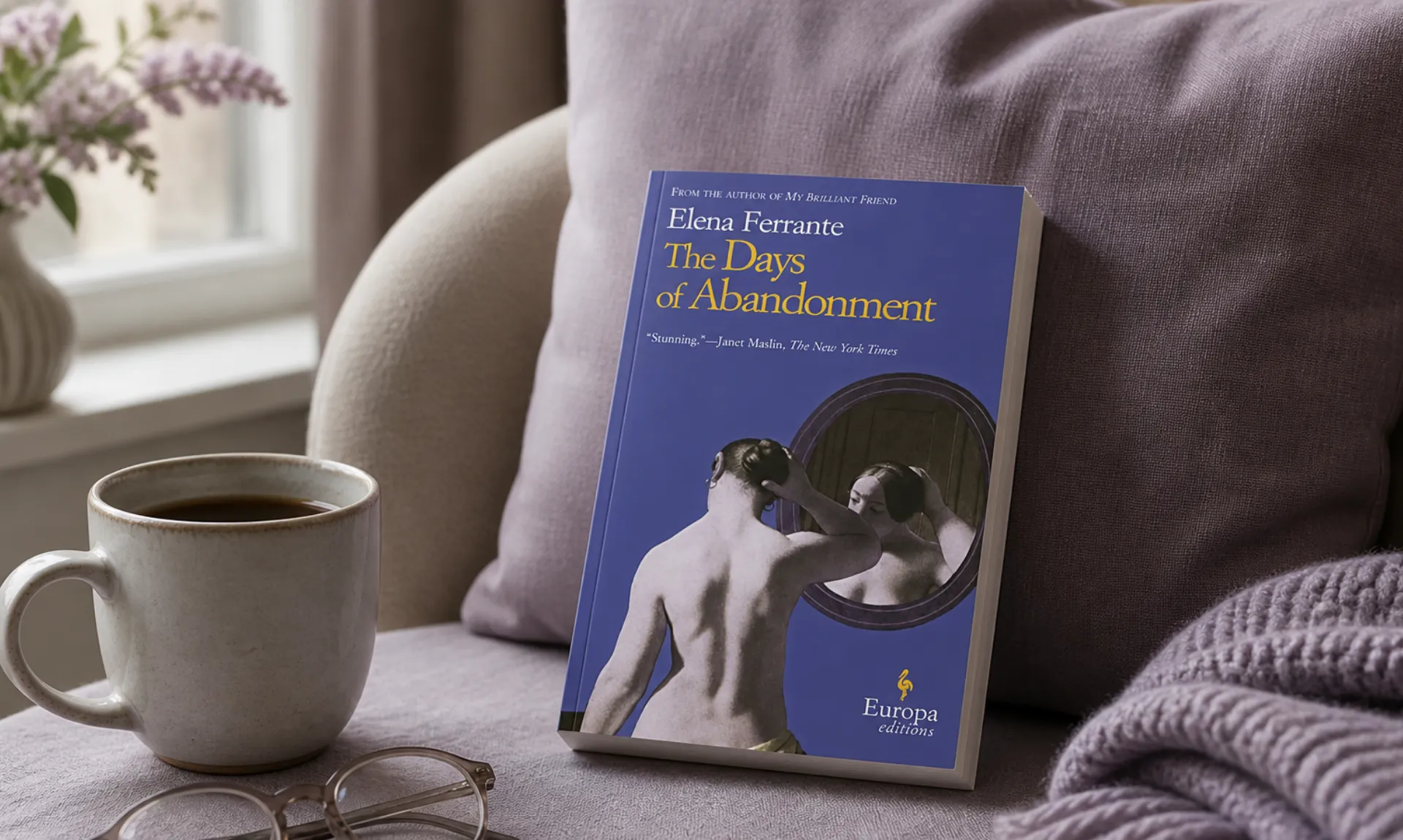
The Days of Abandonment by Elena Ferrante

Genre: Literary fiction, psychological fiction
Length: 218 pages
Best for: Readers who enjoy intense character studies, psychological fiction, and books about marriage, motherhood, and female identity
I finished The Days of Abandonment recently, and I honestly haven’t read anything quite like it. It feels like a monologue of melancholy and torture.
The novel follows Olga, a woman whose husband suddenly leaves her after fifteen years of marriage, leaving her alone with their two children. What follows is an increasingly intense psychological unraveling as she struggles with abandonment, motherhood, marriage and her sense of identity. I have reviewed the full book here.
Ferrante has this quality that makes me feel as though I’m watching a film rather than reading a book. I had a similar feeling while watching Melancholia, Lars von Trier’s strange and painfully melancholic science-fiction film about two sisters whose lives unfold against the approach of a rogue planet threatening Earth. The stories are obviously unrelated, but the atmosphere gave me the same feeling: beautiful, strange, descriptive and profoundly sad.
What I found particularly heartbreaking was seeing marriage and motherhood from this perspective. These are things we’re generally taught to associate with fulfillment, love and stability. Ferrante takes those same things and shows what they can look like when a person’s entire sense of self has become tangled up in them. And Olga’s deterioration is difficult to watch.
I loved the book, but I also desperately wanted it to end because I wanted Olga’s agony to end. That is probably one of the strangest compliments I can give a book: I was enjoying it enormously while simultaneously thinking, please, someone give this woman a break.
Would I recommend it?
Yes, especially if you enjoy Madame Bovary, The Bell Jar, The Awakening or other psychologically intense books about women’s lives.
A Little Life by Hanya Yanagihara

Genre: Literary fiction, contemporary fiction
Length: 833 pages
Best for: Readers looking for emotionally intense fiction about friendship, trauma, love, and the limits of human endurance
There is a whole debate surrounding A Little Life…Is it genuinely heartbreaking, or is it simply a bulk of exaggerated pain? I’m firmly on the first side.
You can argue with me about the book’s plot, its level of suffering, or whether it crosses the line into emotional excess. I’m not particularly interested in doing that here because, for me, the book worked. It really made me cry.
I genuinely think there are two types of readers in this world: people who love A Little Life and people who absolutely cannot stand it. And I don’t think these two groups will ever reach an agreement. You can debate it, defend your position, bring evidence, call witnesses, nothing will change. There is simply no diplomatic solution to the A Little Life debate.
The novel follows four friends: Jude, Willem, JB and Malcolm, as their lives develop over several decades in New York. Jude gradually becomes the emotional center of the story, and his traumatic past continues to shape his relationships, his body and his understanding of himself. The novel explores friendship, trauma, love, addiction and survival.
Some of the scenes that stayed with me most were actually the quiet ones. Jude being alone with his thoughts can be far more heartbreaking than any of the bigger dramatic moments. And I think timing matters enormously with this book. Maybe someone reads it and thinks it’s exaggerated. Fine. Maybe someone else reads it and thinks it is one of the greatest emotional experiences they’ve ever had. Also fine.
I think you have to meet A Little Life at the right moment in your own life. Maybe you’re too young for it. Maybe you’re too old for it. Maybe you’re too tired. Maybe you’ve simply reached a point where you don’t have the emotional space for what it is asking from you. For me, I was in the right place for it.
Would I recommend it?
Yes, but think again! This is an extremely heavy book dealing with traumatic material. If you’re in the mood for a quiet, uplifting story about friendship, this is absolutely not the book I would hand you.
My Dark Vanessa by Kate Elizabeth Russell

Genre: Contemporary literary fiction
Length: 384 pages
Best for: Readers who want psychologically complex, unsettling fiction about grooming, abuse, memory, and manipulation
Oh, My Dark Vanessa. What do I even say about this book? This will probably always be somewhere in my top five books. And I know that sounds slightly strange when we’re talking about one of the most disturbing books I’ve read, but that’s exactly how I feel about it.
You might not even call it a sad book in the traditional sense. I can understand that. But one thing is certain: something is deeply wrong with this book. And I mean that as a compliment.
The novel follows Vanessa, who at fifteen becomes involved with her forty-two-year-old English teacher, Jacob Strane. Years later, when another former student accuses Strane of sexual abuse, Vanessa is forced to reconsider the relationship she has spent years understanding as love. The novel moves between her adolescence and adulthood and explores memory, agency, consent and trauma. I was stressed for Vanessa throughout this entire book. I was sad for her. And more than anything, I was deeply upset that this was her life.
That’s what makes the book so depressing to me. You’re not simply watching something terrible happen. You’re watching someone build an entire understanding of herself around something that is profoundly wrong. I also love the book as a piece of writing. The literary references, the narrative, the plot, the characterisation, everything worked for me. This is one of those rare books where the subject matter is incredibly difficult and yet I still find myself admiring the book itself enormously.
Would I recommend it?
Yes, if you are prepared for extremely difficult subject matter. This is not a light psychological thriller you pick up because you like a dark cover. Please check the content warnings first.
The Incest Diary by Anonymous

Content warning: This book contains descriptions of childhood sexual abuse and may be extremely distressing for some readers.
Genre: Memoir
Length: 125 pages
Best for: Readers who are prepared for an extremely difficult firsthand account of childhood abuse
This is probably the hardest recommendation on this entire list. The Incest Diary is an anonymous memoir based on the author’s own experience of prolonged abuse by her father. The author chose to remain anonymous, and the book revisits both the abuse and its psychological aftermath. It is a few hundred pages, but the length is almost irrelevant once you know what you’re reading.
I actually found my copy in a thrift store, and I had barely heard of the book before finding it. It was heartbreaking, disturbing, and one of those books that genuinely made me lose hope in humanity for a while.
The fact that this is someone’s actual experience changes the reading experience completely. You’re not watching a fictional character go through something terrible. You’re reading someone trying to make sense of what happened to her and what it did to her life.
I still feel upset thinking about the girl behind the story and the life she could have had. I don’t really know what else to say about this one. It is exactly what the title suggests, and you absolutely need to check the content warnings before reading it. This is not a book I would casually recommend; it is currently on Audible, but I bet listening to it would be even harder.
Would I recommend it?
Only with serious reservations. If you choose to read it, go into it knowing exactly what it contains. It is a very short book, but emotionally it is anything but light.
Shoot the Damn Dog by Sally Brampton

Genre: Memoir, mental health memoir
Length: 338 pages
Best for: Readers who want to understand depression through firsthand experience
This might be one of the most underhyped books I’ve read. Or at least it wasn’t hyped up back in 2017 when I read it for the first time.
I found it in a thrift store too, actually, alongside The Incest Diary, and I barely ever see it recommended online which is a shame because I think this is the kind of sad book that is genuinely important to read.
Shoot the Damn Dog is a memoir of severe depression by Sally Brampton. She writes about experiencing depression from the inside, including treatment, relapse, stigma and the ways the illness affects both the sufferer and the people around them.
What I got from this book was more than sadness. It gave me a much better understanding of depression. It actually helped me understand some of the people in my own life better.
I’ve read other books about mental health, including I Want to Die but I Want to Eat Tteokbokki and Good Morning, Monster, and I found both interesting and important in their own ways. But with Shoot the Damn Dog, I never had that feeling that something was missing. The writing is beautiful. The chapter structure is fantastic. Even the chapter titles are creative and begin with quotations that immediately pull you into the subject.
But what really stayed with me was the way Brampton shows depression as something that doesn’t necessarily disappear neatly once you’ve “overcome” it. What happens when you get better and then become depressed again? Why can’t you simply move on? What does recovery look like when the same darkness keeps returning? Those questions make the book much more complicated than a simple story about someone defeating depression.
And then there is the heartbreaking ending. My version had an afterword by her daughter, which was absolutely beautiful, I am sharing a few lines from it that really capture the essence of Brampton’s journey. Her daughter writes:
She was vibrant and real and down to earth. And, so, when people met her for the first time, they thought: how could this woman have depression? But she did. Depression is not a fair illness, and it is not a kind one either. It does not discriminate and it does not pity, and to claw one’s way out of its embrace takes every last ounce of strength in a body and then some…My mother didn’t give up ad depression didn’t win. She was simply, in her own words, ‘defeated by the long, hard struggle to stay alive.’
Would I recommend it?
Yes. In fact, I wish more people talked about this memoir. If you want to understand depression, or you’re looking for memoirs about mental health that are beautifully written rather than simply informative, this is one I would strongly recommend.
The Song of Achilles by Madeline Miller

Genre: Greek mythology, romance
Length: 431 pages
Best for: Readers who enjoy Greek mythology, historical fantasy, tragic romance, and literary retellings
There is another debate around The Song of Achilles, people either tell you it is devastating or tell you they don’t understand why everyone thinks it is that sad. I’m firmly in the first camp.
I’m also a Greek mythology fan, so I came to this book with an existing idea of Achilles. I met him through the older mythology, through Homer and the stories that have survived for centuries. Miller’s Achilles feels different. She takes a figure who can seem almost impossibly larger than life and turns him into a person.
The novel retells the story of Achilles and Patroclus through Patroclus’s perspective, beginning with their childhood and eventually moving into the Trojan War. Helen, Hector, Paris, Thetis and the wider mythology all become part of the tragedy. And honestly, I felt for everyone. That’s what made it so sad for me.
It isn’t only Achilles and Patroclus. The entire mythology feels tragic when you see these characters as people with lives, fears, relationships and things to lose. Miller writes so beautifully, she really brings these characters to life, and that is especially impressive when you’re working with people who already exist in the cultural imagination.
I also think The Song of Achilles is a wonderful introduction to Greek mythology if you’ve never read much of it before. It isn’t a substitute for reading Homer, obviously, but it can be a fantastic doorway into that world. And yes, it is tragic, very tragic. I knew the mythology and how it would end, and still I suffered; the credit goes to Miller’s narrative style.
Would I recommend it?
Absolutely. If you’re looking for book recommendations that combine romance, mythology and beautiful writing, this is one of the easiest recommendations on this list.
Madame Bovary by Gustave Flaubert

Genre: Classic fiction, literary fiction, historical fiction
Length: 390 pages
Best for: Readers who enjoy character studies, classics, psychological fiction, and stories about female dissatisfaction
Oh, what a character study! If you are a fan of The Bell Jar, The Awakening, The Yellow Wallpaper, or The Days of Abandonment, I think there is a good chance you’ll understand why Madame Bovary belongs here.
The novel follows Emma Bovary, an unhappily married woman who becomes increasingly dissatisfied with the ordinary life she finds herself living. Her romantic and material desires lead her into relationships and decisions that gradually push her toward suffering and ruin. But the sadness in Madame Bovary is subtle.
It isn’t necessarily going to make you cry. It doesn’t feel like someone has reached inside your chest and ripped your heart out. Instead, the melancholy seems to run through the entire book. You can feel it even when nothing particularly terrible is happening.
That is one of the things I loved most about it. Flaubert creates this strange atmosphere where Emma’s dissatisfaction becomes almost physical. Her life is supposed to be fulfilling in all the ways society has told her it should be, and yet she can’t make herself feel fulfilled. I also love the cinematic quality of the novel. I could see so many of the scenes unfolding in my head like a film.
It is one of my favorite classics, and I think you have to read it in the right mood. This is not the book I’d recommend when you want something fast and cheerful. It asks you to sit with a character’s dissatisfaction and watch it slowly consume her.
Would I recommend it?
Definitely. Especially if you love classics with strong female characters, psychological depth and complicated ideas about marriage, desire and identity.
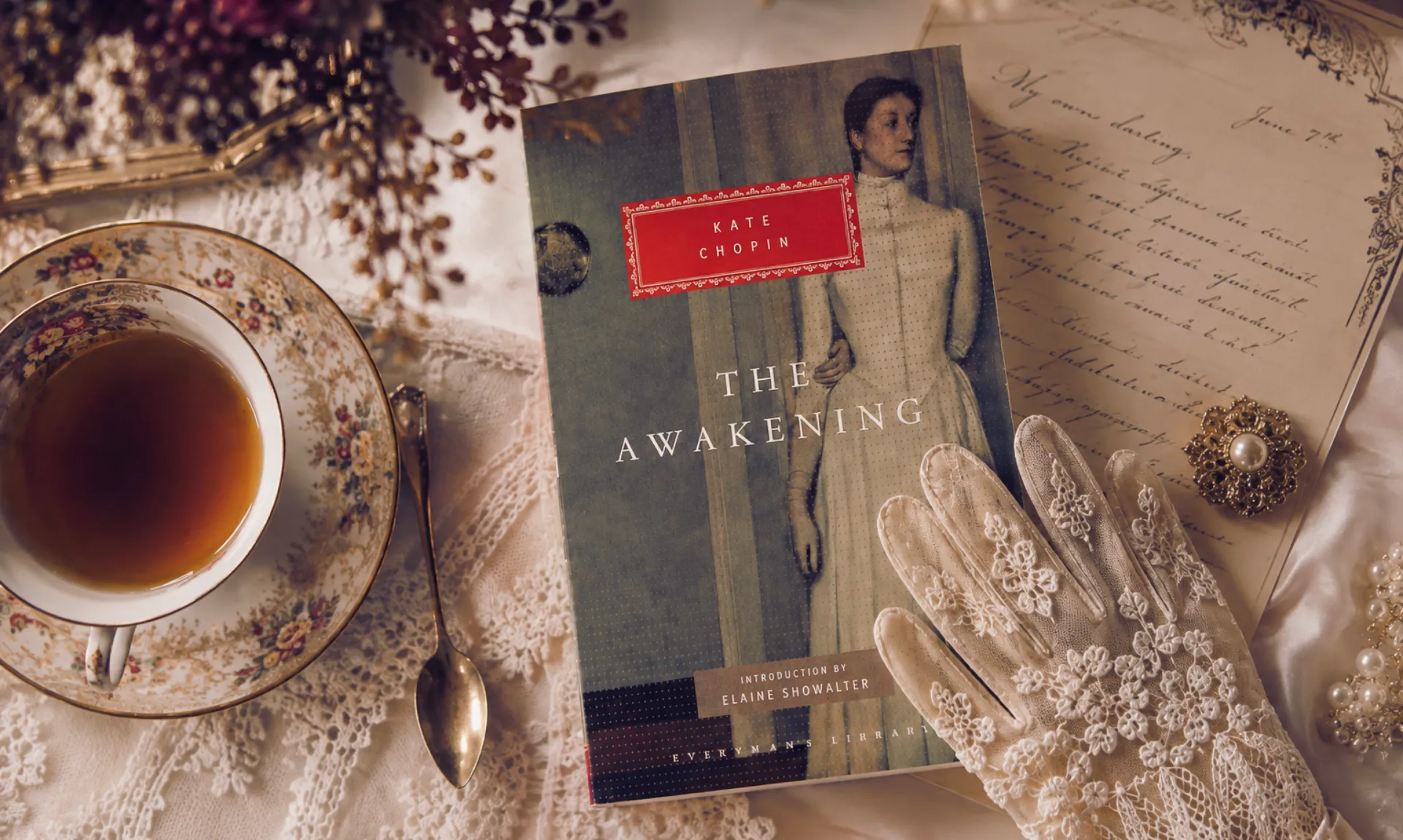
If you like books about dissatisfied female protagonists, I’ve also reviewed The Awakening by Kate Chopin, another classic that explores a woman questioning her life, marriage, and the expectations placed on her.
The Hours by Michael Cunningham

Genre: Literary fiction, historical fiction
Length: 239 pages
Best for: Readers who enjoy literary fiction, Virginia Woolf, psychological novels, and stories about women’s lives
And finally, The Hours. This is one of my favourite books of all time, and I have spoken about it quite a lot (in two blogs already!), so perhaps ending a list of the saddest books I’ve read with it is a little predictable. I don’t care. But again, I have barely seen this book online, and it’s currently available on Kindle Unlimited.
Michael Cunningham’s The Hours follows three women in three different periods of time: Virginia Woolf, Laura Brown, and Clarissa Vaughan. Their stories unfold in parallel and are connected through Virginia Woolf’s Mrs. Dalloway. The novel won the Pulitzer Prize for Fiction in 1999. So it’s kinda big deal in the literary circle.
Anyway, the premise alone is brilliant. But what makes The Hours so sad is the psychological depth of these women’s lives. Cunningham takes ordinary moments and gives them enormous emotional weight. A woman reading a book. A woman making a cake. A woman planning a party. And underneath it all is this persistent feeling that something is wrong.
Laura Brown’s story is the one that stayed with me the most. There is something heartbreaking about watching someone inhabit a life that looks perfectly normal from the outside while feeling completely disconnected from it on the inside. That is the kind of sadness I find particularly powerful. Sometimes the person sitting next to you is having the worst day of their life, and you have absolutely no idea.
Also, the book has Woolf’s last letter that she wrote before stepping into the river, so it’s really something that you would enjoy as a Virginia fan.
I also love how the book deals with gender, identity, sexuality, mental health and the expectations placed on women without turning those ideas into a lecture. Everything comes through the characters and their lives. And the writing is beautiful, quietly tragic, and just…powerful! It had such an impact on me that it left me completely speechless, yet reformed.
You don’t necessarily finish The Hours sobbing (although I did). You finish it with a strange heaviness, thinking about the lives people build, the lives they imagine, and the lives they might have lived instead.
Would I recommend it?
Completely. If you want serious literary fiction, especially if you enjoy classics or Virginia Woolf, this is one of the strongest book recommendations I can give you.
If you’re drawn to melancholic stories and complicated characters, you might enjoy my piece on Sad Girl Literature, where I explore the trend, why it resonates with readers, and share a few bonus recommendations along the way.
Some Stories Are Hard to Leave Behind
I started this list thinking about what actually makes a book sad, and I’m not sure I have a perfect answer even now. Maybe that’s because sadness in books is such a personal thing. One reader might cry over a love story, while another might finish a book feeling angry at society, disturbed by human nature, or simply unable to stop thinking about a character who never got the life they deserved. That is what connects these books for me.
The Kite Runner made me think about guilt and everything we carry from the past. A Thousand Splendid Suns made me think about women, war, and how easily we take ordinary freedoms for granted. Notes from Underground made me question what happens when your own mind becomes your worst enemy. Shoot the Damn Dog gave me a better understanding of depression. And some books, like The Incest Diary, made me question humanity itself.
Then there are books like Madame Bovary and The Hours, where the sadness is quieter. It doesn’t announce itself. It simply seems to exist underneath everything. So no, I wouldn’t claim these are objectively the 12 saddest books of all time. There are thousands of books I haven’t read, and I’m sure you have a few titles already coming to mind that I somehow missed. These are simply the saddest books I’ve read so far.
And honestly, I think that’s the more interesting way to make a list like this. Every reader has their own sadness meter. A book that leaves one person devastated might leave another wondering what all the fuss was about. That’s part of the fun.
If you’re in the mood for a book that stays with you long after the last page, I hope you found something worth adding to your reading list here. And if you’re looking for something a little more cheerful afterward, I completely understand. You can also explore more book recommendations and reading lists on The Reader Life, there’s plenty to discover, including books that might hurt a little less.