
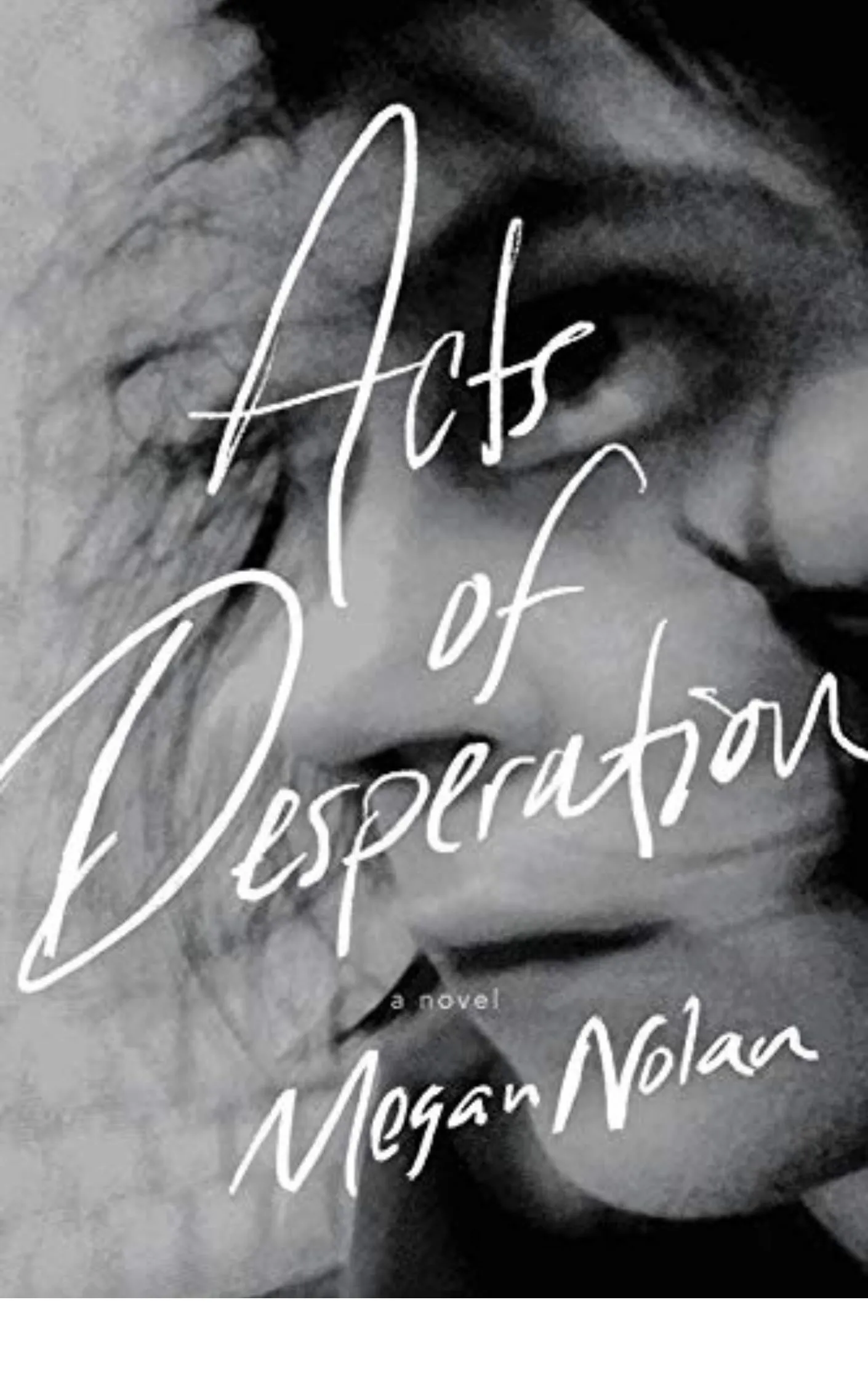
Acts of Desperation by Megan Nolan Review | A Heartbreaking Literary Portrait of Obsession
This post may contain affiliate links. As an Amazon Associate and Bookshop.org affiliate, I earn from qualifying purchases at no extra cost to you.
Table of Content
Book Snapshot
Title: Acts of Desperation
Author: Megan Nolan
Genre: Literary Fiction / Contemporary Fiction
Pages: 288
Best For: Readers who enjoy literary fiction, psychological character studies, unreliable narrators, and emotionally intense stories about obsession, toxic relationships, and female identity.
I don’t think I’ve ever described a book as both a five-star read and one I would hesitate to recommend.
Yet that is exactly how I feel about Acts of Desperation.
Megan Nolan’s debut novel is deeply uncomfortable, emotionally exhausting, and at times genuinely disturbing. It isn’t a book I loved because it made me happy. In fact, there is very little happiness to be found within its pages. I loved it because it felt brutal and sometimes…honest.
Long after I finished reading, I found myself returning to its characters, its atmosphere, and the uncomfortable truths it exposes about obsession, loneliness, and the desperate need to be loved.
This is not a novel that offers easy answers or comforting resolutions. Instead, it asks readers to sit with emotions that are often difficult to acknowledge: humiliation, dependency, self-loathing, and the terrifying possibility of losing yourself in another person.
Would I recommend Acts of Desperation to everyone?
Absolutely NOT!
But if you appreciate literary fiction that is willing to look directly at the messier aspects of human relationships, this novel is unforgettable and a bit too depressing.
For the fans of literary fiction, my recent review of Elena Knows is also gonna be a pretty good treat! But warn you…both of these books are NOT for the faint-hearted!
What Is Acts of Desperation About?
Set primarily in Dublin, Acts of Desperation follows an unnamed young woman whose life becomes consumed by her relationship with Ciaran, an older writer and cultural critic.
From the moment she meets him, she knows she is lost.
As she admits early in the novel:
“I was in love with him from the beginning, and there wasn’t a thing he or anybody else could do to change it.” (p. 28)
What follows is not a romance in the traditional sense but a gradual unraveling. The narrator becomes increasingly dependent on Ciaran’s affection and approval, shaping her emotional well-being around his moods, his attention, and his validation.
As the relationship deteriorates, so does her sense of self. The result is a novel that feels less like a love story and more like a psychological autopsy of obsession.
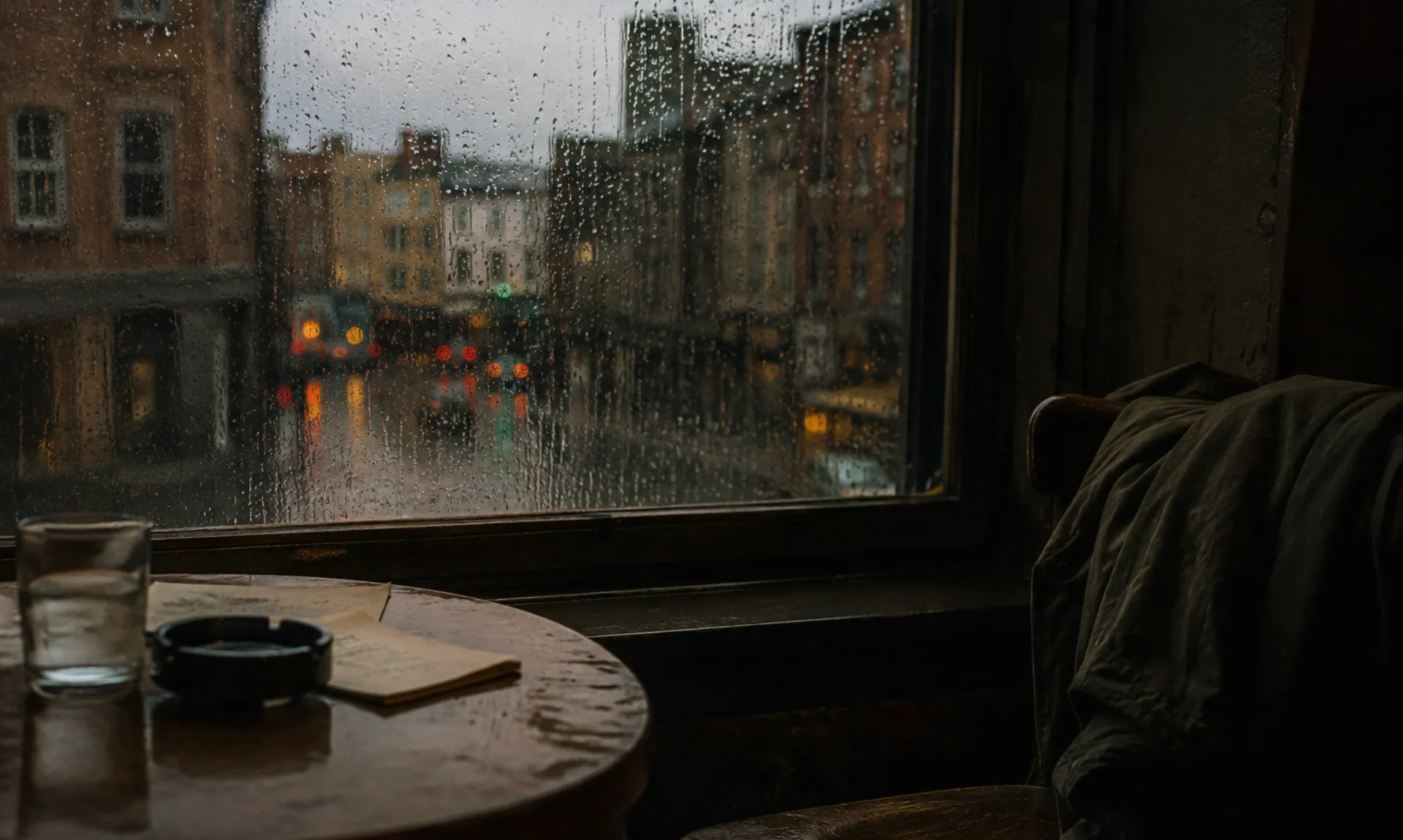
Dublin Feels Like Another Character
One aspect of Acts of Desperation that deserves more attention is its setting.
The novel takes place largely in Dublin, and while the city is never described in excessive detail, its presence lingers throughout the narrative. There is a persistent greyness to the atmosphere, a quiet bleakness that mirrors the narrator’s emotional state.
Perhaps it is just me, but there is something about contemporary Irish fiction that understands sadness exceptionally well.
Whether it is Sally Rooney’s Normal People or Megan Nolan’s Acts of Desperation, these novels often place emotionally adrift characters within ordinary settings and somehow make that loneliness feel overwhelming. Their characters move through pubs, apartments, and familiar city streets while carrying emotional burdens that seem impossible to put down.
In Acts of Desperation, Dublin becomes more than a backdrop. It becomes a mood. The city feels cold, isolating, and exhausted, perfectly reflecting the narrator’s inner life.
By the end of the novel, I found it impossible to separate the bleakness of the setting from the bleakness of the story itself.
Megan Nolan Writes Female Obsession With Brutal Honesty
What impressed me most about Acts of Desperation was its honesty.
The narrator is not always sympathetic. She is not always rational. She often makes choices that are frustrating to witness. Yet she never feels fake.
Too often, female protagonists are written in ways that make them easy to admire. Megan Nolan refuses to do that. Instead, she gives us a woman who is contradictory, self-destructive, vulnerable, and painfully human.
One of the most devastating passages in the novel comes when the narrator reflects:
“I said through my huddling and hiding that I was nothing, and I was happy to be nothing if nothing was what pleased him best. If nothing was the least trouble, then I would be it, and gladly.” (p. 57)
For me, this quote captures the entire novel.
This is not simply a woman in love. This is a woman slowly erasing herself in the hope that being smaller, quieter, and less demanding will finally make her worthy of affection.
The tragedy is that many readers will recognize some version of this impulse, even if they have never experienced it to the same extreme.
If you enjoy reading emotionally devastating stories, I have shared a dedicated list of 11 heartbreaking books!
Depression, Loneliness, and Emotional Exhaustion
While many discussions of Acts of Desperation focus on the relationship, I was equally struck by the novel’s portrayal of depression.
At one point, the narrator observes:
“One of the saddest things to feel is that nothing in the world is new, that you have exhausted all your interactions with it.” (p. 62)
I had to stop reading after that passage, because it was shockingly true, and yet so simple. Few writers capture emotional exhaustion as effectively as Megan Nolan does here. The novel understands that depression is not always dramatic. Sometimes it manifests as boredom, numbness, or the feeling that the world has somehow run out of possibilities.
Throughout the book, loneliness exists both inside and outside the relationship. Even when the narrator gets what she thinks she wants, she remains profoundly isolated.
The Difference Between Loving Someone and Living With Them
One of the most interesting aspects of Acts of Desperation is that the narrator eventually gets what she believes she wants.
She gets Ciaran. She gets the relationship. She gets the shared domestic life she has spent so much time imagining.
Yet Megan Nolan demonstrates that obtaining the object of obsession does not resolve obsession itself. If anything, living with Ciaran exposes just how incompatible fantasy and reality can be. The narrator continues shrinking herself in the hope of becoming lovable:
“I knew that if I could be smaller, smaller less, and less, if I could be tidied, then he would love me fully and properly; and that anybody – oh, everybody – would.” (p. 152)
That line broke my heart, because beneath all the relationship drama lies a much deeper question: How much of ourselves are we willing to sacrifice in exchange for love?
Ciaran Is Infuriating Because He Feels Real
I disliked Ciaran almost immediately.
Megan Nolan describes him as possessing the “downy, darkening blond of a baby just leaving its infancy” (p. 13), an image that somehow captures both his attractiveness and his immaturity.
He is emotionally unavailable, self-absorbed, dismissive, and often cruel in ways that feel subtle rather than overt. What makes him such an effective character is that he never becomes a caricature.
He isn’t a villain, but much worse. He’s a believable depiction of a narcissistic man. He is the kind of person who constantly leaves someone questioning their worth without ever appearing obviously abusive to outsiders. And perhaps that realism is what makes him so disturbing.

The Writing Is Beautiful, Intimate, and Painful
The prose in Acts of Desperation is extraordinary.
Not because it is flashy or overly poetic, but because it feels startlingly intimate.
Reading this novel often felt less like following a story and more like being trapped inside another person’s mind. Every insecurity, every humiliation, every obsessive thought is presented with uncomfortable clarity.
One passage that stayed with me comes much later in the novel:
“And that’s something to recommend love: that it has clear rules like a game, and it has speeches and sayings you’ll have heard in films and in songs. There are patterns and there are steps to be taken. If you lose the game that’s one thing, and that has to be dealt with, but at least there is a game to be played at all.” (p. 222)
Even in moments of heartbreak, Nolan finds ways to articulate emotions that most people struggle to put into words. That ability is what elevates the novel beyond a story about a toxic relationship and turns it into something far more profound.
If you prefer reading contemporary fiction, I have shared a very helpful guide to access unlimited contemporary books online.
Final Thoughts on Acts of Desperation
I don’t think Acts of Desperation is a book people read for enjoyment. I think it is a book people read for understanding obsession, loneliness, emotional dependency, and the frightening ease with which a person can lose themselves while trying to be loved.
The final quote that stayed with me comes near the end of the novel:
“Is it brave to be alone? Maybe, in a way. But it was also brave to ask someone to be with me, even though it was the wrong person, and in the wrong way.” (p. 248)
That line captures the complexity of this novel perfectly. The narrator is flawed. She is frustrating. She is often self-destructive, but she is also deeply human.
Acts of Desperation disturbed me, frustrated me, and broke my heart. Yet I could not stop thinking about it. For that reason alone, it earns every one of its five stars.
If you enjoy my writing, there’s a lot more waiting for you on The Reader Life. Have fun exploring!





[…] about female struggle from a purely contemporary perspective, I think you will love my review of Acts of Desperation by Megan Nolan; just fair warning: I think that was one of the saddest books I read in 2026…and quite […]