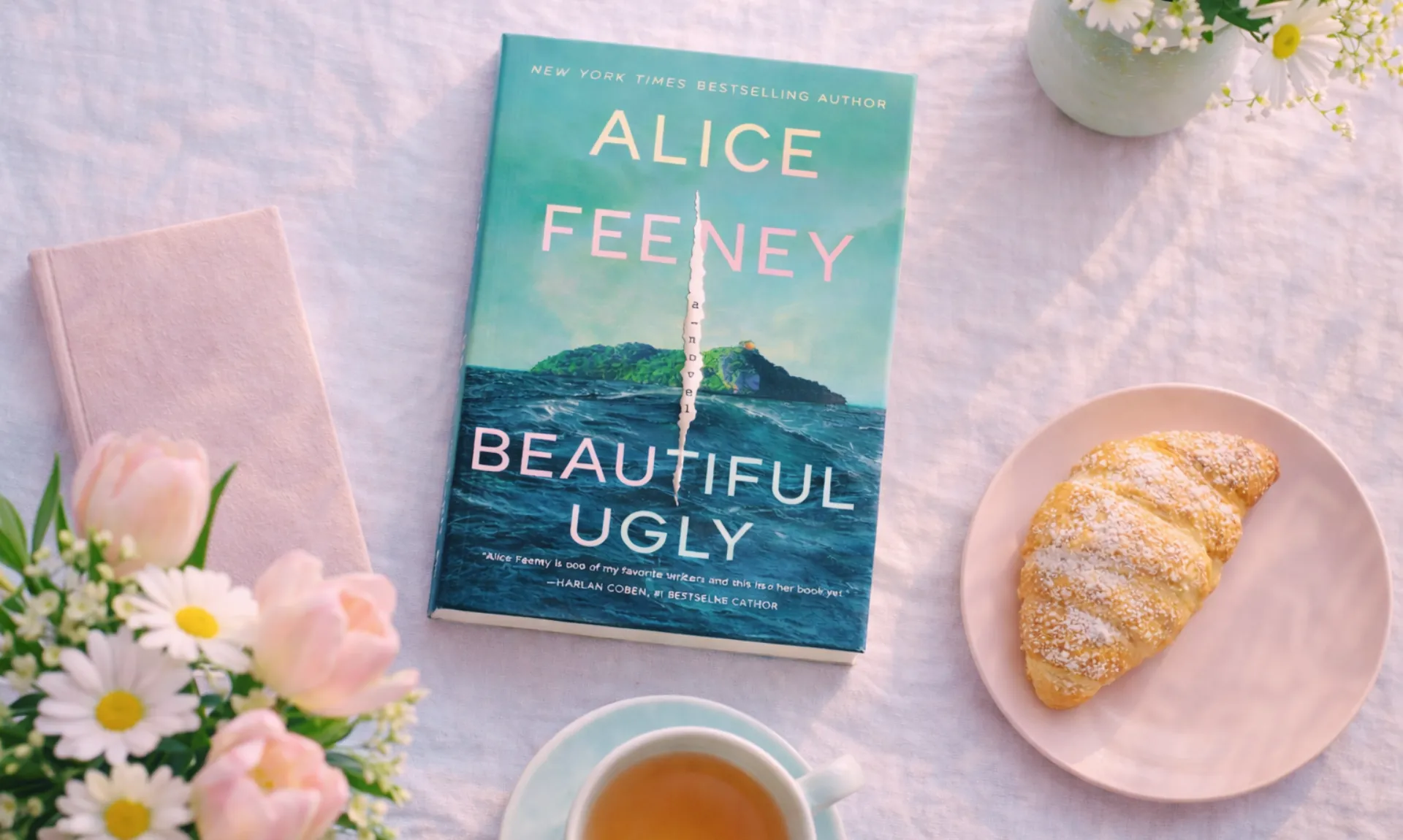
Beautiful Ugly by Alice Feeney: A Twisted Read About Secrets & Consequences
This post may contain affiliate links. As an Amazon Associate and Bookshop.org affiliate, I earn from qualifying purchases at no extra cost to you.
Table of Content
Book Snapshot
Title: Beautiful Ugly
Author: Alice Feeney
Genre: Psychological Thriller
I picked up Beautiful Ugly expecting a fast, twisty psychological thriller.
What I didn’t expect was how layered the story would become once everything started falling into place.
Yes, there’s a disappearance.
Yes, there’s a remote island.
Yes, there’s a shocking twist.
But underneath all that, this is really a story about marriage, abandonment, narrative control, and what happens when we finally have to deal with the consequences of our actions, above all, when we get what we truly deserve!
And honestly, I loved how carefully everything came together.
If you enjoy reading thrillers, you might also like my recommendation of 5 Thrillers That’ll Keep You Hooked
What It’s All About (Spoiler Alert)
At the start of the novel, Abby disappears during a phone call with her husband Grady. She stops her car after seeing someone lying in the middle of the road. Later, only her torn red coat is found near a cliff edge.
For a long time, it feels like a mystery. But what actually happened that night is much darker. (Major Spoilers Ahead)
By the end of the novel we learn that Grady staged the entire scene. After discovering a pregnancy test and believing Abby had cheated on him (not knowing she conceived through IVF after his vasectomy) he lured her out of the car and pushed her off the cliff.
She survived but instead of returning home, she went back to the one place Grady never knew about: the Isle of Amberly.
A year later, Abby’s godmother Kitty sends Grady there under the excuse that isolation will help him write again. But Amberly isn’t a writing retreat.
It’s a place built by women who survived betrayal, abandonment, and violence, and chose to create a life outside the patriarchal structures that hurt them. Grady wasn’t invited there to recover. He was brought there to face what he had done.
Let’s Talk Storytelling
One thing Alice Feeney does incredibly well in this novel is control perspective. At first, Amberly feels peaceful. Quiet. Remote. Protective.
There’s no internet. No signals. No outside contact. Only a small group of women living together in deliberate isolation.
Then slowly, the island starts revealing its structure. Amberly isn’t just a refuge. It’s a system.
Charlie Whittaker subplot makes this even clearer. The cottage Grady moves into once belonged to Whittaker who was a famous writer, and we later learn had some strong connections with Kitty. At first, his story sounds simple: a man who preferred solitude and stayed.
But later we realize writers don’t really leave Amberly. They become part of how the island survives. Their books support the community financially. Their presence becomes permanent.
And once Grady steps into Charlie’s place, everything suddenly makes sense. Even the message framed in the cottage:
the only way out is to write
turns out to be completely literal.
Favorite Characters in Beautiful Ugly
This isn’t the kind of book where you immediately trust the narrators.
Grady especially becomes harder to believe the more we learn about him. He truthfully admits:
“Sometimes I think we are all the unreliable narrators of our own lives.” (p. 301)
Early on, his version of the marriage sounds loving and stable. Later, it becomes clear how much of that story he constructed for himself.
Abby, on the other hand, slowly becomes the emotional center of the novel. Her return to Amberly isn’t escape, it’s a return to somewhere she already belonged as a child and the only survivor of the cave tragedy that shaped the island’s history.
I also really loved Sandy’s character. As the island’s only sheriff, she quietly represents the structure behind Amberly. She isn’t dramatic or controlling. She’s steady, observant, and protective.
And honestly, all the women of Amberly were fascinating.
Each of them carries a difficult past, yet they remain kind, supportive, and willing to rebuild their lives together. That contrast makes the island feel even more powerful as a setting. Grady says at the end:
“No man is an island, but a woman can be if she needs to be.” (p. 301)
So the main characters in the book are women and I kinda had a hard time choosing my favorites.
Interested in reading books but cannot afford it yet? I have compiled a list of 10 Best Book Reading Websites that will offer you either free or super discounted deals!
Themes, Feels & Food for Thought
At its core, Beautiful Ugly by Alice Feeney is about who gets to control the story of a relationship.
Grady believes Abby betrayed him. He believes he was abandoned. He believes he was the victim.
But the novel slowly replaces his version of events with something else entirely.
Amberly represents that shift. It’s a place created by women who refused to keep living inside stories written for them by other people.
The Charlie Whittaker storyline mirrors this perfectly. His life on the island is explained as choice, until we realize how easily narratives can be reshaped by the people around us.
Eventually, the same thing happens to Grady.
The novel also explores:
- fear of abandonment
- childhood trauma
- misogyny inside marriage
- identity after survival
- isolation as protection
- and justice outside traditional systems
Even the island’s no-men rule begins to make sense once its history becomes clear.
Amberly isn’t extreme. It’s an intentionally created sanctuary for women.
If you feel like reading a crazy thriller, you might want to check out Disseverment By Z.C. Krol

Favorite Lines
One of the things I really appreciated about Beautiful Ugly by Alice Feeney was how quietly thoughtful the writing feels. The language stays simple, but every now and then a sentence appears that suddenly explains the emotional core of the story.
Some of these lines stayed with me long after I finished the book:
“Marriage is made of a million beautiful and ugly moments stitched together into a shared tapestry of memories, all of which are viewed and remembered slightly different, like two people staring at the same painting from opposite ends of a room.” (p. 2)
“The problem with reaching the top is that there is only one direction left to go: down” (p. 13)
“The disappeared are not the same as the departed. People tell me I need to move on, but how can I? Without some form of closure I am trapped inside a sad and lonely limbo, desperate to know the truth but terrified of what it might be.” (p. 13)
That uncertainty between disappearance and closure becomes one of the most powerful emotional tensions in the story.
Then, there are lines as:
“A writer who can’t write is one of the saddest creatures in the world” (p. 15)
“Are there any benefits to losing it all? I think about that a lot. Your thoughts can change the shape when you have too much time on your hands. Overthinking things you think you need to worry about, under-thinking the things you should. The only good thing about losing everything is having nothing left to lose.” (p. 21)
“When life bends itself into a question mark you start looking for answers, and when you can’t find the right ones, you go looking for the wrong ones instead. That’s all there is to it.” (p. 89)
“There is nothing sweet about sorrow. Sadness can consume a person if it is allowed to linger too long. It takes root and buries itself inside a person’s soul, until every thought is too heavy, too painful to think.” (p. 135)
The, one of the sharpest observations in the entire book:
“Wives think their husband will change but they don’t. Husbands think their wives won’t change but they do.” (p. 136)
And we have:
“Life is beautiful and life is ugly we have to learn to live with both sides of that same coin and see the light in the darkness. The world is Beautiful Ugly, relationships are Beautiful Ugly, life is Beautiful Ugly. Understanding that makes life easier to live with.” (p. 207)
“Nobody can remember every moment of their own history. Our overburdened minds choose which highlights to hold on to, and which files from our past to delete.” (p. 266)
Feeney makes the purpose of Amberly feel even more intentional once the island’s history becomes clear:
“Men still rule this world and as a result the world is broken. Men still hold most positions of power, men control the government, men control the media, and it is always men who start wars. Men have tricked women into thinking they see us as equals, but real equality, for all women everywhere still feels like little more than a pipe dream.” (p. 269)
Finally, a fitting reminder that this story was never meant to resolve itself neatly.
“Life is a fairy tale that rarely hands out happy endings.” (p. 304)
What Worked for Me
The Isle of Amberly was easily my favorite part of the novel. A heart-shaped island built by women who returned after being discarded by the mainland is such a striking idea for a psychological thriller setting.
I also really loved the Charlie Whittaker storyline and what it adds to the structure of the book. The idea that writers quietly sustain the island and don’t really leave once they arrive makes Grady’s ending feel inevitable rather than surprising.
The psychological manipulation throughout the novel also works incredibly well. The hallucinogenic tea, the uncertainty about whether Abby is really there, and the slow realization that the island is controlling what Grady sees create a subtle horror atmosphere that keeps building without needing dramatic shocks.
Even the ending felt completely earned. Grady spends the novel saying he only wants one thing: to write bestsellers. And in the end, that’s exactly what he gets.

What Didn’t Work for Me
Honestly, there wasn’t much that didn’t work for me here.
Some parts of Amberly’s history require a little suspension of disbelief, but the island is small enough and carefully structured enough that its internal logic still feels convincing.
The dramatic ending actually fits the story perfectly. It feels less like a twist and more like a consequence.
Final Thoughts
Beautiful Ugly by Alice Feeney isn’t just a thriller about a missing woman.
It’s a story about what happens when someone finally loses control of the narrative they’ve been telling about themselves.
Between the reveal that Abby survived, the history of the Isle of Amberly, Charlie Whittaker’s role, and Grady’s eventual fate, everything comes together in a way that feels carefully planned from the beginning.
And the final irony stays with you long after the book ends:
be careful of what you wish for because you might just get it!
If you enjoy layered psychological thrillers with atmosphere, moral tension, and carefully constructed twists, this one is absolutely worth reading.
If you enjoy my thoughts on books like this, there’s a lot more waiting for you on The Reader Life.