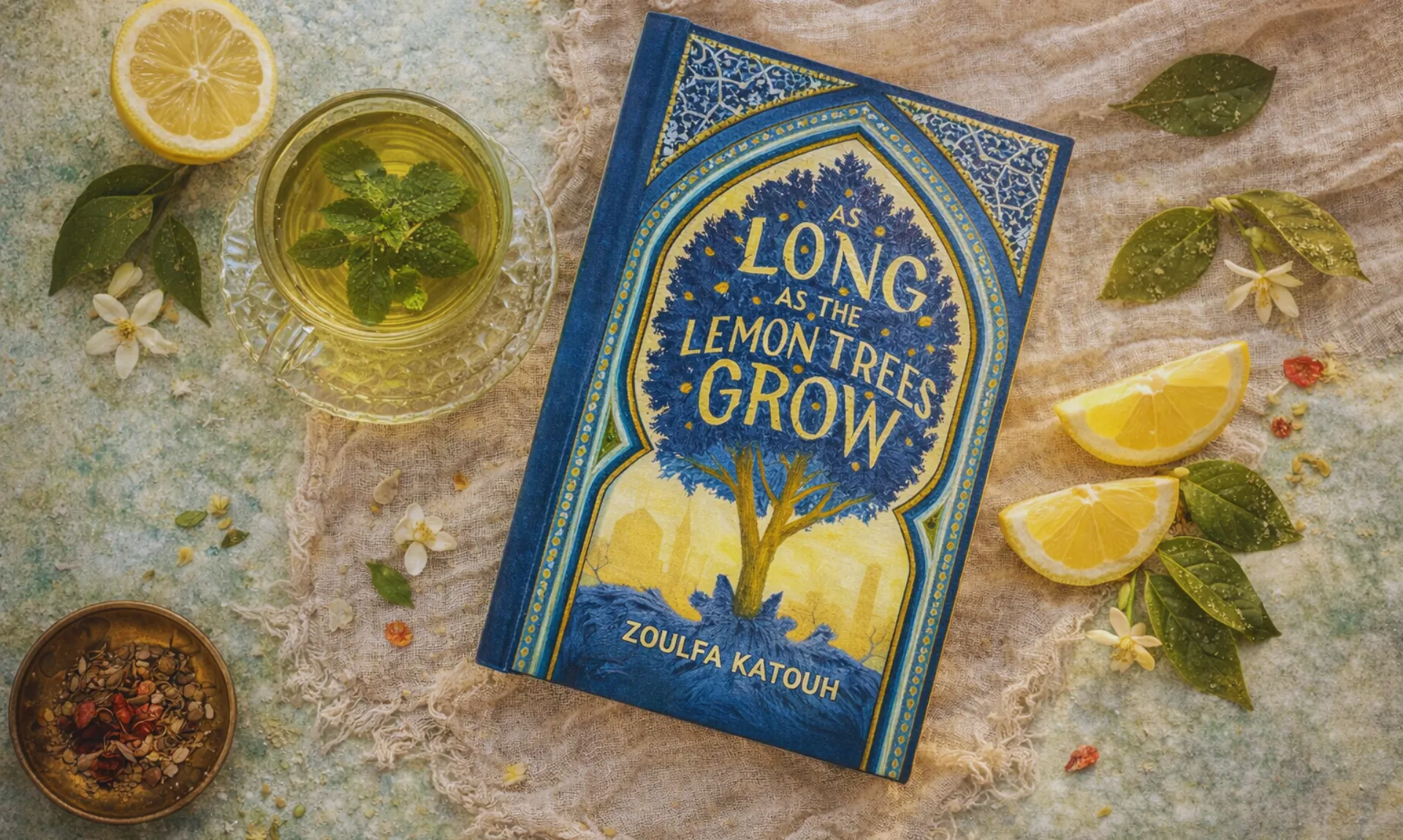
As Long as the Lemon Trees Grow by Zoulfa Katouh: Honest Book Review & Summary
This post may contain affiliate links. As an Amazon Associate and Bookshop.org affiliate, I earn from qualifying purchases at no extra cost to you.
Table of Content
Book Snapshot
Title: As Long as the Lemon Trees Grow
Author: Zoulfa Katouh
Genre: YA Historical Fiction
Some novels tell a story.
Others make you sit with questions you don’t know how to answer.
As Long as the Lemon Trees Grow by Zoulfa Katouh falls into the second category. It’s emotional, heavy, reflective, and even when it doesn’t fully land narratively, it still feels important in a way that stays with you long after the final page.
The story follows Salama, a teenage pharmacy student in Homs during the Syrian uprising against Bashar al-Assad. After losing her parents, she begins volunteering at a hospital treating victims of bombings and chemical attacks while planning to escape Syria with her pregnant sister-in-law Layla.
At its emotional core lies one simple truth:
“No country in the world will love you as yours does.” (p. 22)
That idea shapes every decision Salama makes.
If you want to read more about grief and loss, you might also like my review of I Want to Die but I Want to Eat Tteokbokki. It also explores similar topics but not in the context of war. Both books show what it means to grow up while carrying emotional weight you didn’t choose.
And if you’re ready for something faster after this one, I also shared a list of 5 thrillers to help reset your reading mood after heavier stories, sometimes that change of pace really helps.
What This Story Feels Like (Before the Spoilers)
This is not a fast novel. It’s a slow-paced story about witnessing the wartime turmoil. We meet Salama and learn about her lost family, their tragic deaths, the fate of her brother, and the tale of this family serves as a symbolic representation of every family that suffers in war.
There is a broader depiction of human suffering with hospitals running without supplies, cities shrinking under siege, and families disappearing without explanation.
And at the centre of everything is a question the novel never lets go of: If you leave home, are you saving yourself—or abandoning the people who couldn’t leave?
At one point, Salama reflects:
“Do all six-year-olds know what death is? Or is it only the children of war?” (p. 60)
It’s one of the lines that quietly explains the emotional scale of the story.
But there is a sweet love story, right in the middle of chaos, that makes you believe in hope and survival. It’s a very sad story of a very honest love interaction.
What It’s All About (Major Spoilers Ahead)
One of the most powerful revelations in the novel is that Layla, the person Salama believes she is protecting and escaping with, has already died.
Her presence throughout the story is something Salama creates in order to survive. That realization reshapes everything.
Suddenly the journey is no longer only about escape. It becomes about grief and survival guilt, about what the mind does when reality becomes too heavy to carry alone.
Salama is also accompanied by Khawf, whose name literally means fear in Urdu. He represents the voice inside her pushing her toward survival at any cost, even when survival itself feels morally complicated.
The Reality of War the Novel Quietly Captures
One of the most striking things about this novel is how it shifts readers from hearing about war to standing inside it emotionally:
“The thing is, hearing stories about the ocean’s rage is different from being caught in the middle of the angry waves.” (p. 100)
For many readers outside Syria, that shift becomes one of the book’s most important contributions.
Let’s Talk About the Characters
Interestingly, the characters who stayed with me most weren’t always the central ones.
Layla becomes the emotional center of the story once we understand what she represents.
Hamza’s disappearance also feels painfully real. At first it seems unfinished. Later it begins to feel intentional, reflecting how many activists simply disappeared during the conflict without closure.
Dr. Ziad was easily my favorite character. His quiet determination to keep saving lives even when hope feels impossible represents the kind of courage this novel captures especially well.
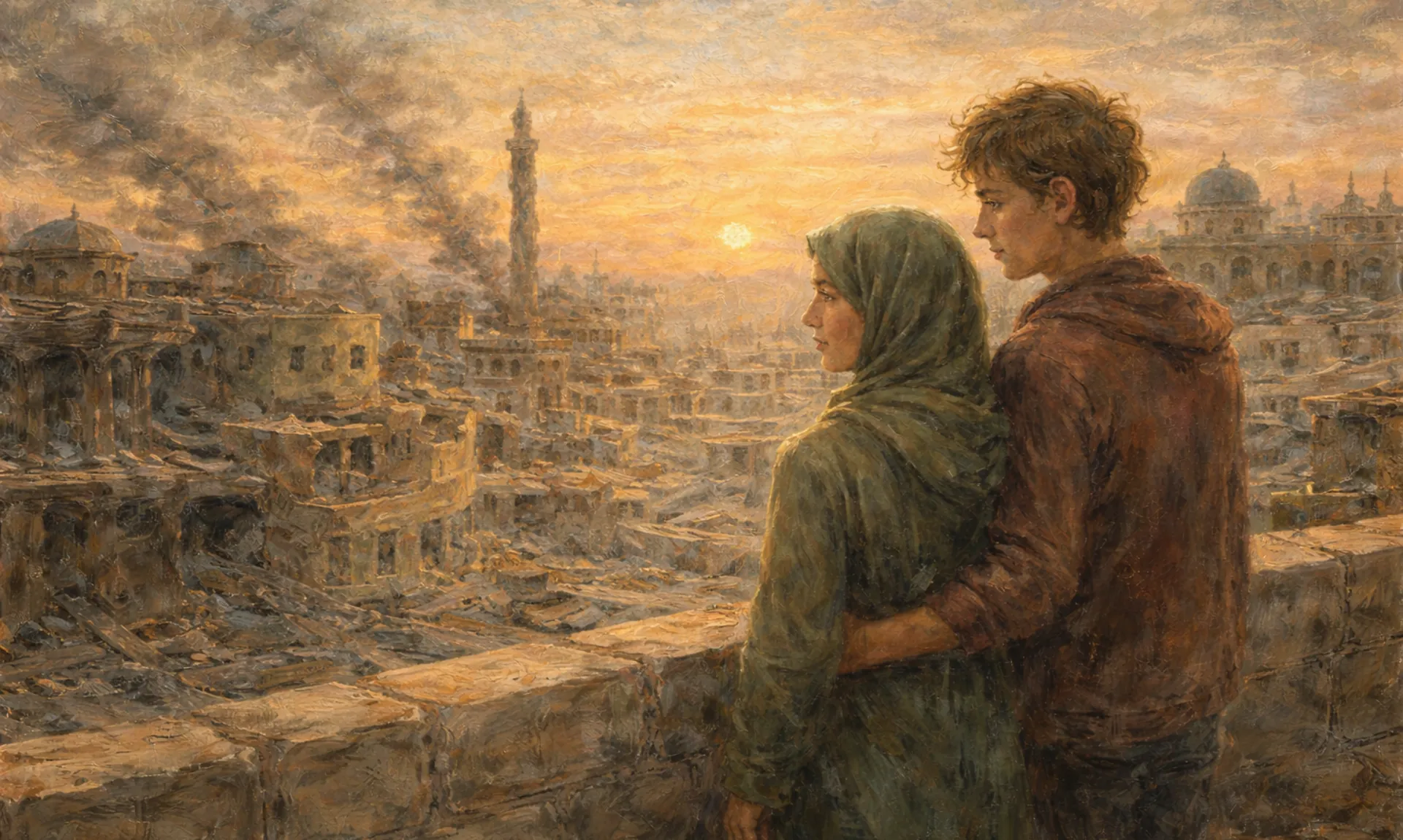
Salama and Kenan’s relationship adds warmth to an otherwise heavy narrative:
“I finally realize that this boy with the old sweater and the disheveled brown hair who wears his heart on his sleeve is beautiful. Standing in the middle of this ravaged, torn city, he is beautiful and real.” (p. 134)
And then there is the scent of lemons:
“I have no idea how, but he smells like the freshest of lemons and it’s a comfort against the panic raging through me.” (p. 157)
In a city filled with smoke, bombs, bullets, and loss, that detail becomes quietly symbolic.
Themes That Stay With You After the Book Ends
The strongest theme for me was survival guilt, that constant question: Why am I alive when others aren’t?
The novel also explores exile, responsibility, childhood interrupted too early, and the emotional cost of witnessing violence up close.
One passage captures the limits of healing especially powerfully:
“Time is the best medicine to turn our bleeding wounds to scars, and our bodies might forget the trauma, our eyes might learnt to see colors as they should be seen, but that cure doesn’t extend to our souls. It doesn’t. Time doesn’t forgive our sins, and it doesn’t bring back the dead.” (p. 161)
Another expresses the exhaustion of being forgotten by the rest of the world:
“I’m exhausted from all of this. I’m exhausted we’re suffocating and no one gives the slightest bit of a damn. I’m exhausted we’re not even an afterthought. I’m exhausted we can’t even have basic human rights.” (p. 215)
Even the city itself becomes a witness:
“This place is haunted by the ghosts of those who lived here, screaming for a justice that’s not been delivered.” (p. 238)
If emotionally reflective novels like this stay with you, I’ve also shared a list of Kindle Unlimited Books for Every Reading Mood that can be helpful companions after heavier stories like this one.
Love as a Form of Survival
One of the most moving parts of the novel is how gently it allows love to exist inside devastation.
Salama describes Kenan’s presence like this:
“His voice comes out soft and quiet, but it’s all I hear. Even if there were a hurricane ripping through Homs, he’s be all I hear.” (p. 244)
And later:
“All I know is that I love him and that even in the darkness surrounding us, he’s been my joy. In the midst of all the death, he made me want to live.” (p. 248)
Perhaps the most hopeful line between them is this:
“He and I are owed a love story that doesn’t end in tragedy.” (p. 279)
What Worked for Me
The hospital scenes were some of the strongest parts of the novel.
They felt immediate, chaotic, and deeply human without becoming overwhelming.
The portrayal of survival guilt added emotional depth I hadn’t encountered often in YA historical fiction.
And the novel succeeds especially well at helping readers understand what everyday life inside besieged cities like Homs might have felt like.
What Didn’t Work for Me
This is a meaningful novel, though as a narrative experience it didn’t fully work for me in every way.
The escape was the most anticipated subplot of the novel, and it was dragged out for the entire plot. When it finally happened, the section felt slightly rushed compared to the emotional weight built earlier in the story.
Khawf, as a symbolic presence, was interesting, though at times it felt slightly constructed rather than fully organic within the narrative.
And while the YA voice suits Salama’s perspective, some readers may find themselves wishing for deeper psychological layering, given how powerful the subject matter already is.
At the same time, I can easily see this novel resonating deeply with readers looking for an emotional story about identity, belonging, and survival during conflict.
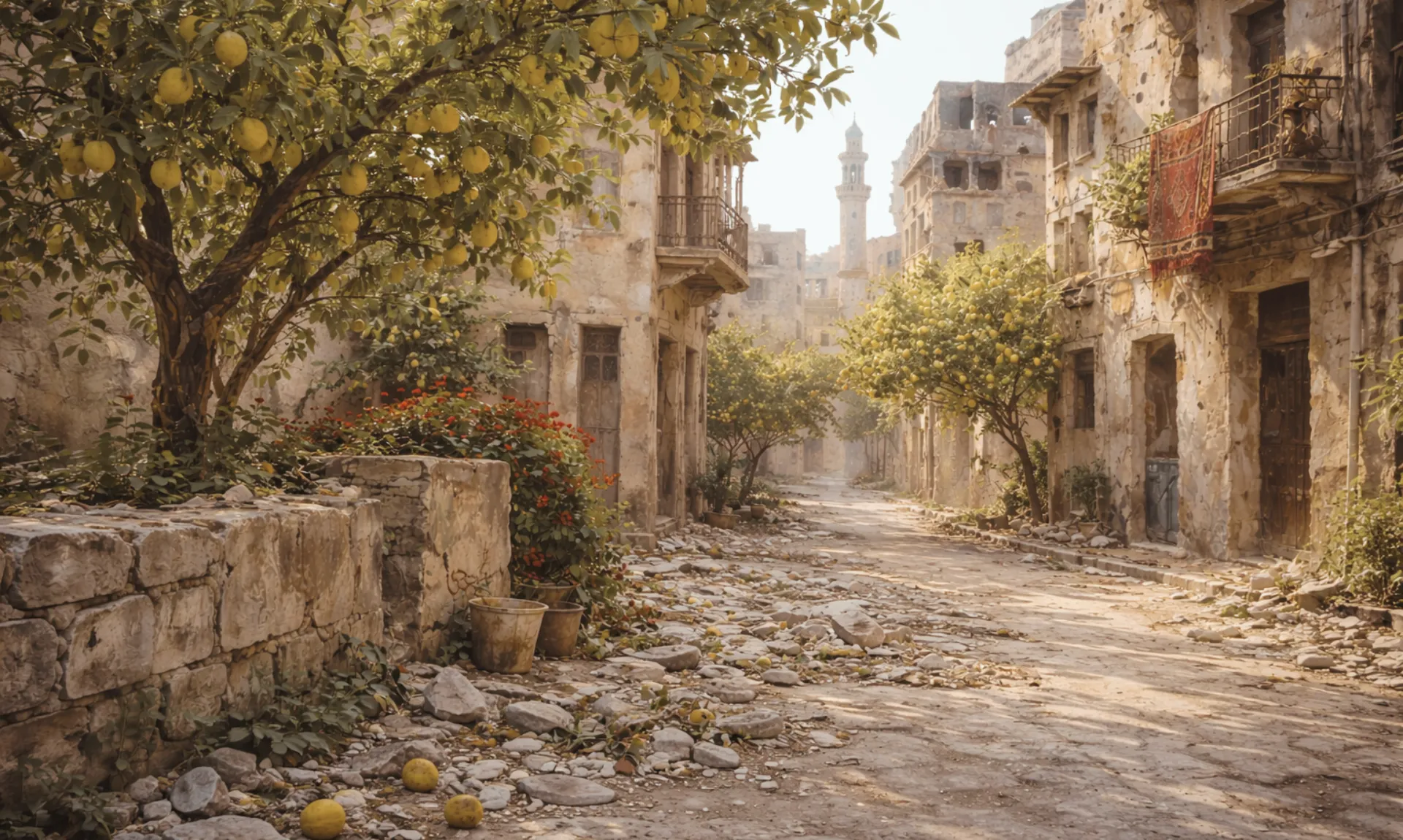
Why the Lemon Trees Matter So Much
The lemon trees are more than a recurring image. They become the novel’s promise about hope itself. Salama says:
“It reminds me that as long as the lemon trees grow, hope will never die.” (p. 362)
Hope is a very prominent theme in the novel. Katouh also discusses the theme of fate and free-will subtly in the novel through the lives of Salama and Kenan. Salama notes:
“Fate has his strings, but we’re the ones who twist them together with our actions. My belief in what’s meant to be doesn’t make me a passive player. No. I fight and fight and fight for my life.” (p. 290)
Is As Long as the Lemon Trees Grow Worth Reading?
Yes, especially for readers interested in emotionally reflective fiction about exile, memory, and survival.
It’s not always an easy novel to read. But it’s a sincere one. And it asks a question that stays long after the final page: What does it cost to leave home when staying is no longer safe?
If you enjoy thoughtful discussions about books like this one, there’s a lot more waiting for you on The Reader Life.
If you enjoyed reading about As Long as the Lemon Trees Grow, I highly recommend getting your own copy, it’s totally worth the experience!